
Your wedding dress may hold some of your happiest memories, but you do not have to leave it hanging in your wardrobe forever.
If you are wondering what to do with a used wedding dress, there are several ways to give it a new purpose.
You can sell it, donate it to another bride, turn it into a special keepsake, or transform it into something you can use every day.
The best choice depends on the condition of your dress, its sentimental value, and what you want to achieve.
Whether you have a traditional white gown, an ivory lace dress, or a modern satin wedding dress, you have plenty of options.
Here are some practical and creative ideas to help you decide what to do with your pre-owned wedding dress.
1. Sell Your Used Wedding Dress

Selling your used wedding dress is a great option if you want to recover some of the money you spent on it. Another bride may be looking for a beautiful gown but prefer to pay less than the price of a new one.
You can sell your dress through online marketplaces, bridal resale websites, or local wedding groups. Take clear photos of the front, back, neckline, train, and any special details to help buyers understand what you are offering.
Before listing your dress, check its condition and clean it if necessary. Include the designer, original purchase price if known, dress size, measurements, alterations, and any visible flaws.
Be honest about stains, loose beads, damaged zippers, and other signs of wear. A clear description helps you attract serious buyers and avoid misunderstandings.
2. Donate Your Wedding Dress to Another Bride

If you no longer need your dress, consider donating it to someone who would appreciate wearing it. Your gown could help another bride celebrate her wedding without spending as much on clothing.
Look for bridal charities, community organisations, women’s support groups, or local initiatives that accept wedding dresses.
Some organisations provide gowns to brides facing financial difficulties, while others use donated dresses to raise money for charitable causes.
Check the organisation’s donation requirements before handing over your dress. Some accept only clean gowns in good condition, while others may welcome older styles that need minor repairs.
You can also ask friends, family members, or people in your community if they know someone who needs a wedding dress. This option allows you to give your gown a new home while helping another person prepare for an important day.
3. Repurpose Your Wedding Dress for a Special Occasion

You do not have to reserve your wedding dress for a single day. A skilled tailor may be able to transform it into an outfit you can wear to anniversaries, formal dinners, or other special events.
For example, a long satin gown could become a shorter cocktail dress. A lace wedding dress could be redesigned into an elegant knee-length outfit, while a simple ivory gown might work well as a formal evening dress.
Consider removing the train, changing the neckline, shortening the hem, or adjusting the sleeves. You could also add coloured details to make the dress feel less bridal.
Before making any changes, ask a tailor to examine the fabric, seams, and construction. Some dresses are easier to alter than others, especially when they have heavy beading, several layers of tulle, or intricate lace.
4. Turn Your Wedding Dress Into a Keepsake

If your wedding dress has deep sentimental value, keeping a small part of it may be more practical than storing the entire gown. You can turn its fabric, lace, or decorative details into a keepsake that reminds you of your wedding day.
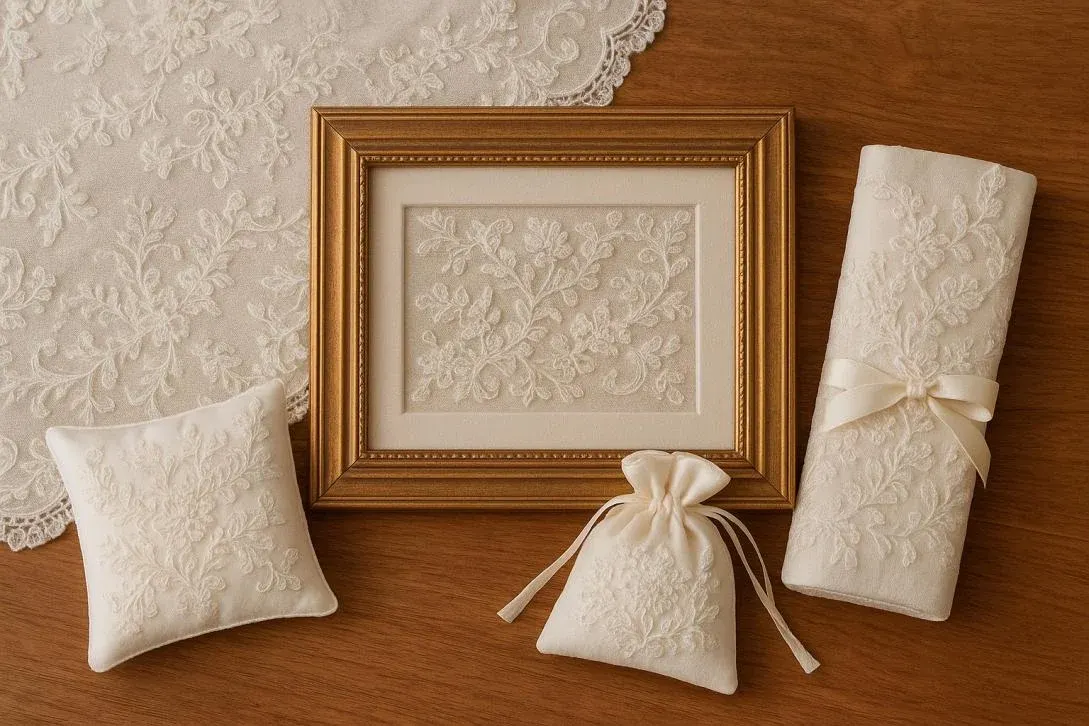
One idea is to frame a piece of lace alongside a wedding photograph. You could also preserve a fabric swatch in a memory box with your invitation, wedding programme, or other meaningful items.
If your dress has delicate embroidery or a distinctive design, ask a professional to help you choose a section that will look beautiful when displayed. Store any remaining fabric in a clean, dry place away from direct sunlight.
This option is especially useful if you want to reduce storage space without letting go of every part of your dress. It gives you a simple way to keep a physical reminder of the occasion.
5. Make a Wedding Dress Into a Christening or Naming Ceremony Gown

A wedding dress can sometimes be transformed into a christening gown, baptism outfit, or naming ceremony dress. This idea is particularly meaningful if you would like to pass a family keepsake to a younger generation.
The soft fabric, lace trim, satin panels, and delicate buttons from your gown may work well for a smaller formal outfit.
A tailor experienced in heirloom clothing can help you select suitable sections and create a design that fits the occasion.
You do not need to use the entire dress. The bodice, sleeves, lace edging, or skirt fabric may provide enough material for a small garment.
If you hope to keep the finished outfit in your family for years, choose a simple design that is easy to store. Keep any leftover fabric and a note explaining its origin so future family members can understand its story.
6. Create Decorative Items for Your Home

Your used wedding dress can become part of your home decor if you enjoy crafts or personalised decorations. Its fabric may be suitable for cushion covers, decorative textile art, framed lace, or other small projects.
For instance, a piece of embroidered fabric could be framed and displayed in your bedroom. Satin or lace from the gown could also decorate a keepsake cushion, while small fabric sections might be used to embellish a memory album.
Think about the original design before choosing a project. Lace, beading, and embroidered details can add interest to simple objects, while plain satin may work better for cushions or fabric-covered boxes.
If you are not confident sewing, ask a local tailor or craft maker to help. Start with a small project so you can preserve the most meaningful parts of the dress for future use.
7. Turn Your Wedding Dress Into a Bridal Robe or Nightgown

If your wedding dress has soft satin, silk, or lightweight lace, consider turning it into a beautiful nightgown or dressing robe. This gives the fabric a new purpose while allowing you to keep a piece of your wedding memories.
A tailor can use the skirt fabric to create a flowing nightgown or transform lace panels into delicate sleeves. You could also make a lightweight robe with lace trim for anniversaries or other special moments.
This idea works best with fabrics that feel comfortable against the skin. Dresses with heavy beading, stiff tulle, or thick structural layers may be less suitable.
Before cutting the gown, decide whether you want to keep any original details. A lace neckline or a row of covered buttons could become a distinctive feature of your new garment.
8. Use It for a Wedding Anniversary Photoshoot

You can wear your wedding dress again for an anniversary photoshoot. This is a lovely way to revisit your wedding memories and create new photographs together.
Choose a location that feels meaningful to you, such as a garden, beach, historic building, or the venue where you exchanged your vows. You could recreate a favourite wedding photograph or choose a completely different setting.
Your original dress may need cleaning, minor repairs, or alterations before the photoshoot. Check the hem, seams, and fastenings, especially if you have stored it for several years.
You can also change the styling to make the photographs feel fresh. Try a different hairstyle, a colourful bouquet, simple jewellery, or a new pair of shoes.
9. Donate It to a Theatre Group or Costume Department

Theatre groups, film productions, photography studios, and costume departments sometimes need wedding dresses for performances or creative projects. Your used gown could become a costume for a character in a play, film, or stage production.
Contact local theatres, drama schools, film students, or community arts organisations to ask whether they accept clothing donations. Explain the dress’s condition and include photographs so they can decide whether it suits their needs.
Before donating, ask whether the organisation intends to alter or cut the gown.
Costume departments may modify clothing to fit a performer or suit a production, so this option is best if you are comfortable with the possibility that the dress will not remain intact.
If you would like to preserve the gown’s original design, ask whether it can be borrowed rather than permanently donated. Agree on the terms before handing it over.
10. Make Accessories From Your Old Wedding Dress

You can turn small sections of your wedding dress into accessories that are easy to keep or give as gifts. This is a useful option when the dress is damaged in places but still has attractive lace, buttons, or decorative fabric.
Here are a few ideas to consider:
- A fabric clutch bag: Use satin or lace to create a small evening bag for formal occasions.
- A hair accessory: Turn a piece of lace or a fabric flower into a hair clip or bow.
- A keepsake garter: Use a small section of the dress to make a personalised garter.
- A jewellery pouch: Sew a small pouch for storing earrings, necklaces, or other special items.
- A Christmas ornament: Create a fabric ornament to mark your wedding anniversary each year.
Choose a project that suits the amount and condition of the fabric available. If the gown contains valuable beading or intricate lace, a professional seamstress can help preserve those details.
11. Pass the Dress Down to a Family Member

If your wedding dress has a timeless design, you may want to keep it for a daughter, niece, or another family member. Someone in your family might enjoy wearing it for their own wedding or using parts of it in a new design.
However, avoid assuming that another person will want to wear the exact same gown. Wedding dress preferences vary, and the style or fit may not suit their plans.
Instead, offer the dress as an option without creating pressure. The future bride could wear it as it is, alter it to suit her taste, or use a small piece of the fabric in her own gown.
If you decide to store the dress for many years, have it cleaned by a specialist familiar with bridal fabrics. Keep it in suitable archival packaging, away from sunlight, moisture, and extreme temperature changes.
12. Recycle the Dress if It Cannot Be Reused

Sometimes, a wedding dress is too damaged, stained, or worn to sell or donate. If that describes your gown, textile recycling may be worth exploring before you throw it away.
Start by contacting textile recycling programmes or fabric recovery organisations in your area. Ask whether they accept formalwear and mixed materials, since wedding dresses may contain several fabrics, linings, zippers, beads, and other components.
Some recycling services accept only certain textiles, while others may not be able to process heavily embellished gowns. Check the requirements before making a trip or paying for a collection service.
If textile recycling is unavailable, consider whether any undamaged sections can still be used for small craft projects. Even a dress that is no longer wearable may contain fabric suitable for practice sewing, decorative items, or other creative uses.
How to Choose the Best Option for Your Used Wedding Dress
With so many possibilities, the right choice depends on what matters most to you. Consider these factors before deciding what to do with your gown.
| Your priority | Option to consider |
|---|---|
| Recover some of the purchase cost | Sell the dress |
| Help another bride | Donate it |
| Keep wedding memories | Create a keepsake |
| Wear it again | Alter it or use it for an anniversary photoshoot |
| Preserve a family tradition | Pass it down |
| Give the fabric a new purpose | Make accessories or home decor |
| Dispose of an unusable gown responsibly | Explore textile recycling |
Before making a final decision, inspect the dress carefully. Check for stains, tears, loose embellishments, damaged fastenings, and signs of fabric deterioration.
If you are unsure whether to alter or preserve the gown, speak to a bridal specialist before cutting it. Once the fabric has been cut, restoring the original design may be difficult or impossible.
Frequently Asked Questions
Can I sell my wedding dress after wearing it once?
Yes. A wedding dress worn once may appeal to brides looking for a pre-owned gown. Its resale potential depends on factors such as condition, designer, style, original price, and demand.
Should I clean my wedding dress before selling or donating it?
Usually, yes. A clean dress is more appealing to potential buyers and donation recipients, but check the requirements of the resale platform or charity first. Use a professional cleaner experienced with bridal fabrics, especially for delicate lace, silk, or heavily embellished gowns.
Is it better to sell or donate an old wedding dress?
Selling may suit you if you want to recover some of your spending. Donating may be a better choice if your main goal is to help another bride or support a charitable organisation.
What can I do with a wedding dress that is no longer in fashion?
You can have it altered, turn it into accessories, use it for a photoshoot, or transform parts of it into keepsakes. You can also sell or donate it if someone appreciates its original style.
How should I store a wedding dress I want to keep?
Have it assessed and cleaned by a bridal preservation specialist. Store it in suitable acid-free packaging in a cool, dry place, away from direct sunlight and moisture, and avoid leaving it in an ordinary plastic garment bag for long periods.
Final Thoughts
Deciding what to do with a used wedding dress does not have to be difficult. You can sell it, donate it, redesign it, preserve it as a keepsake, or find another creative use for its fabric.
Think about whether you value the dress more for its financial worth, its sentimental meaning, or its potential for reuse. Once you know your priority, you can choose an option that feels right for you.
Your wedding dress has already been part of a special occasion. Giving it another purpose can help its story continue long after the wedding day.