
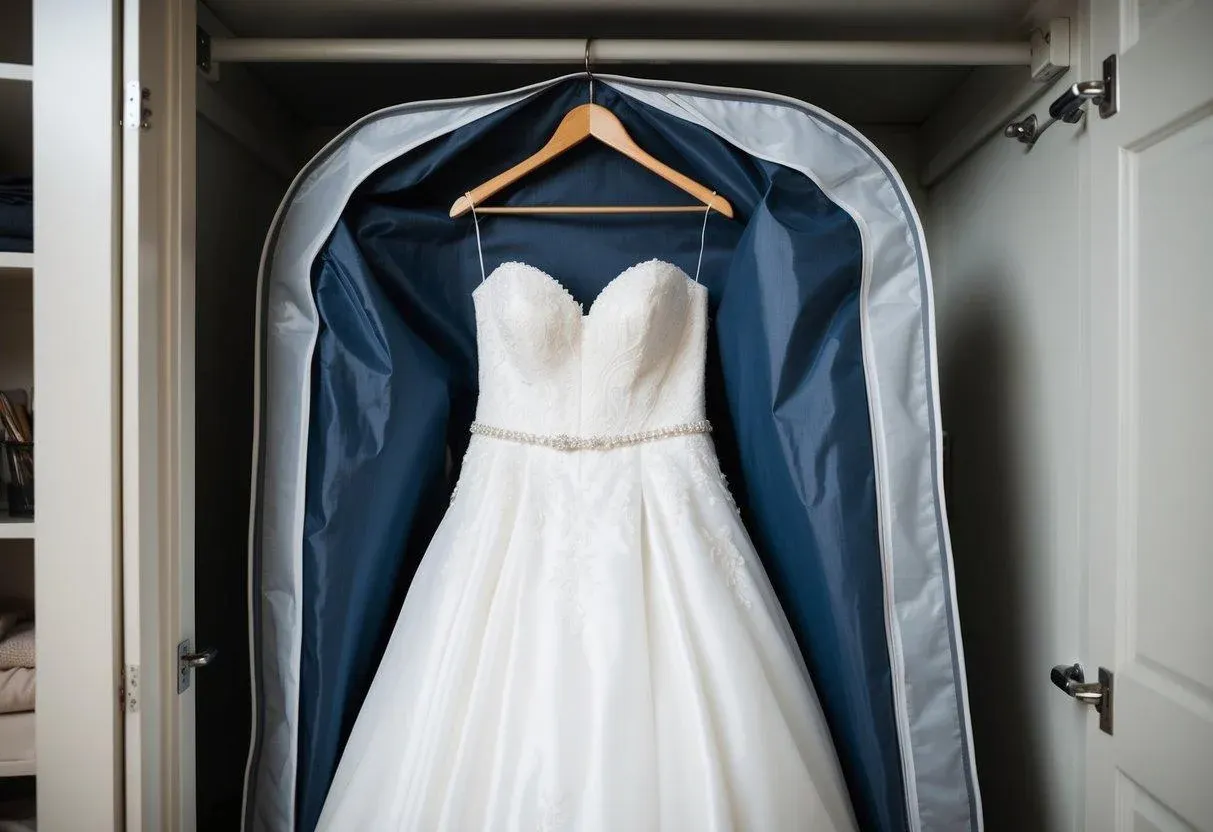
Your wedding dress is more than an outfit. It holds memories of one of the most special days of your life.
Whether you want to keep it for sentimental reasons, pass it down to someone in your family, or save it as a reminder of your wedding, proper care will help it last for years.
So, how do you store and preserve a wedding dress? The best approach is to clean it as soon as possible, use suitable storage materials, and keep it in a cool, dry place away from direct sunlight.
You should also protect it from dust, moisture, and pests.
In this guide, you will learn how to prepare your dress for storage, choose the right materials, and avoid common mistakes that can damage delicate bridal fabrics.
1. Clean Your Wedding Dress Before Storing It
Before you put your wedding dress away, make sure it is clean. Even if it looks spotless, it may have hidden stains from sweat, perfume, makeup, food, or drinks.
These marks can become more difficult to remove over time. Some stains may also cause yellowing or fabric damage if you leave them untreated for years.
Should You Clean Your Wedding Dress at Home?
For most wedding dresses, professional cleaning is the safest choice. Bridal gowns often feature delicate lace, silk, tulle, beads, sequins, or other details that need special care.
Look for a cleaner who has experience handling wedding dresses.
Tell them about any visible stains and point out areas that may need extra attention, such as the hem, neckline, sleeves, and underarms.
Avoid assuming that an ordinary dry cleaner has the right experience. Ask how they handle delicate fabrics and whether they inspect the dress before cleaning it.
What If You Cannot Clean It Immediately?
If you cannot take your dress to a professional straight away, let it air out in a clean, dry room. Keep it away from direct sunlight, damp walls, and areas with strong smells.
Do not rub stains or apply household cleaning products without checking whether they are safe for the fabric. You could spread the stain or damage the material.
If your dress has silk, intricate beadwork, or unusual embellishments, ask a specialist for advice before attempting any treatment yourself.
2. Choose the Right Storage Box or Garment Bag
The materials you use to store your wedding dress can make a big difference. The right container protects the gown from dust and dirt while allowing you to store it safely for a long time.
You generally have two main options: a preservation box or a breathable garment bag. Your choice will depend on the dress’s fabric, weight, design, and available storage space.
Use an Acid-Free Preservation Box

An acid-free preservation box is a good option for long-term storage. It helps protect your gown from dust, light, and everyday handling.
Choose a box made from archival-quality, acid-free materials. You can also use acid-free tissue paper to cushion the fabric and separate delicate layers.
Fold the dress gently and place tissue paper between the folds to reduce sharp creases.
Avoid pressing the gown tightly into the box, especially if it has heavy embroidery, raised lace, or three-dimensional decorations.
A specialist preservation service may provide a box designed for bridal gowns. If you buy one yourself, check that its materials are suitable for long-term textile storage.
Use a Breathable Garment Bag
A breathable garment bag can work well if you want to hang your dress or access it occasionally. Choose a clean cotton or other suitable fabric bag that protects the gown without trapping excess moisture.
Avoid storing a wedding dress in a plastic dry-cleaning bag for long periods.
Plastic can trap moisture under unsuitable conditions, and the dress may develop mould or mildew if dampness builds up.
If you choose to hang the dress, consider its weight. A heavy ball gown may stretch or distort under its own weight, particularly around the shoulders and straps.
For a lightweight dress, hanging may be suitable if the gown has strong internal support. For a heavier design, a properly prepared storage box may be a better choice.
3. Use Acid-Free Tissue Paper to Protect Delicate Fabrics
Acid-free tissue paper is useful when preparing a wedding dress for long-term storage. It cushions the fabric, separates layers, and helps reduce pressure on delicate details.
Ordinary tissue paper, coloured paper, and newspaper are not suitable substitutes. Their dyes or acidic components may stain the dress or contribute to fabric deterioration over time.
How to Fold a Wedding Dress for Storage
Start by placing the cleaned dress on a clean, flat surface. Make sure your hands are clean and dry before handling the fabric.
Gently fold the gown into a shape that fits your storage box without forcing the material into tight spaces. Place acid-free tissue paper between the folds, especially around areas with lace, embroidery, beads, or sequins.
Pay particular attention to the bodice and other structured areas. Avoid placing heavy folds directly over delicate decorations, as pressure can flatten or damage them.
If the gown has a long train, arrange it carefully rather than cramming it into the box. You may need a larger container to prevent excessive folding.
For especially delicate or heavily embellished dresses, ask a bridal preservation specialist to prepare the gown. Proper packing is worth the extra care when you want to keep the dress for many years.
4. Store Your Wedding Dress in a Cool, Dry Place
Choosing the right location is just as important as choosing the right storage materials. Heat, moisture, sunlight, and sudden changes in temperature can damage bridal fabrics over time.
A clean indoor cupboard or a suitable bedroom closet may work well if the conditions remain stable. The key is to choose a place that stays dry, cool, and away from direct sunlight.
Avoid storing your wedding dress in a basement that becomes damp, an attic that gets very hot, or a garage with changing temperatures. These areas may expose the gown to moisture, pests, dust, and other sources of damage.
Keep the storage container away from windows and exterior walls that become damp. Do not place heavy objects on top of the box, as pressure may crush the fabric or decorations.
If you live in a warm or humid climate, pay extra attention to moisture control. Use a dry indoor room with good environmental stability, and check the storage area for signs of dampness.
Your wedding dress does not need to be displayed to remain special. Storing it safely out of direct light is often better than leaving it exposed on a bedroom rail for years.
5. Avoid Plastic Bags and Unsuitable Storage Containers
It may seem convenient to place your wedding dress in any available bag or box, but the wrong materials can damage it over time. Choose storage materials that protect the gown without trapping moisture or transferring colour to the fabric.
Avoid ordinary plastic bags, coloured tissue paper, newspaper, and cardboard boxes that are not designed for long-term textile storage. These materials may create problems with moisture, acidity, or dye transfer.
If you use a preservation box, make sure it is clean, sturdy, and large enough for your dress. Do not squeeze the gown into a small container just to save space.
You should also avoid sealing a damp dress inside an airtight container. Make sure the gown is completely dry before packing it away, and follow the storage instructions provided by your preservation specialist.
6. Protect Your Wedding Dress from Moisture and Pests
Moisture is one of the biggest concerns when storing a wedding dress for several years. Damp conditions can encourage mould and mildew, which may leave unpleasant smells and stains on delicate fabrics.
Pests can also damage your gown. Moths and other fabric-feeding insects may affect natural fibres such as silk and wool, while dust and dirt can attract unwanted insects.
Here are some simple ways to protect your dress:
- Keep the storage area dry: Check the room for damp patches, leaks, and musty smells.
- Avoid direct contact with floors and walls: Place the storage box on a clean, stable shelf or raised surface.
- Keep food away from the storage area: Food crumbs and spills can attract insects.
- Check the room occasionally: Look for signs of moisture, pests, or damage around the storage container.
- Use moisture-control products carefully: If you need a dehumidifier or desiccant, follow the product instructions and keep it separate from the dress.
Avoid spraying insecticides, air fresheners, or perfume directly onto your gown. These products may leave residues or affect delicate fabrics.
If your home is humid for much of the year, consider using a dehumidifier in the room. This can help maintain a more suitable storage environment without exposing the dress to unnecessary chemicals.
7. Should You Hang or Fold Your Wedding Dress?
Both methods can work, but the best choice depends on your dress’s weight, fabric, and construction. Some gowns are better stored flat or folded, while others can be hung safely with the right support.

Hanging a lightweight wedding dress
Lightweight gowns with suitable internal support may be stored on a padded hanger. Use the gown’s internal hanging loops if the manufacturer or preservation specialist recommends them. Cover the dress with a breathable garment bag.

Folding a heavy wedding dress
Ball gowns, dresses with heavy beading, and designs with layered skirts may be better stored in a suitable preservation box. This reduces the strain that hanging can place on the shoulders and straps.
If your gown has a long train, a structured bodice, or intricate embellishments, ask a specialist how to store it. The wrong hanging method can stretch the fabric, while tight folds can create permanent creases.
Whatever method you choose, avoid placing the dress under heavy items or allowing its fabric to press against rough surfaces.
8. How Often Should You Check Your Stored Wedding Dress?
You do not need to unpack your wedding dress every few weeks. Frequent handling can expose it to dust, body oils, and unnecessary creasing.
Instead, inspect the storage area occasionally and look for signs of dampness, pests, or unusual smells. If you use a garment bag, check that it remains clean and dry.
For a boxed gown, follow the instructions provided by the preservation service. Some professionally preserved dresses are packed for long-term storage, so opening the box unnecessarily may disturb the protective arrangement.
If you notice a musty smell, visible mould, unusual yellowing, or moisture inside the container, seek advice from a textile preservation specialist. Do not scrub the affected area or use bleach to remove the marks.
It is also helpful to keep a note of when the dress was cleaned and stored. This makes it easier to track its care history, especially if you plan to pass it down to a family member.
9. Common Wedding Dress Storage Mistakes to Avoid
Even an expensive wedding dress can suffer damage if you overlook a few basic precautions. Avoid these common mistakes when preparing your gown for long-term storage.
- Storing an unclean dress: Invisible stains can become harder to remove over time.
- Using ordinary plastic for long-term storage: Plastic bags may trap moisture under unsuitable conditions.
- Keeping the dress in direct sunlight: Prolonged exposure can fade or discolour delicate fabrics.
- Hanging a heavy gown incorrectly: Excessive weight can stretch the shoulders, straps, or bodice.
- Using coloured tissue paper: Dyes may transfer onto the fabric.
- Storing the dress in a damp room: Moisture can encourage mould and mildew.
- Packing the gown too tightly: Excessive pressure can flatten decorations and create deep creases.
The easiest way to avoid these problems is to clean the dress properly, choose suitable storage materials, and select a dry location with stable conditions.
10. How Much Does Wedding Dress Preservation Cost?
The cost of wedding dress preservation depends on the gown’s fabric, construction, condition, and the service you choose. Some services offer cleaning only, while others include specialised packaging and a preservation box.
A simple gown may need less work than a heavily embellished dress with several layers, a long train, or delicate lace. Stains that require special treatment may also affect the final cost.
Before choosing a service, ask what the package includes. Check whether it covers stain inspection, cleaning, packaging, and a suitable storage box.
If you are comparing services, look for a cleaner with experience in bridal textiles rather than choosing based on price alone. Ask how the gown will be handled and whether the packaging is intended for long-term storage.
You can also ask whether the preservation materials can be replaced or whether the gown can be inspected later. These details will help you make a more informed decision.
Final Thoughts
Knowing how to store and preserve a wedding dress can help you protect its fabric, colour, and delicate details for years to come.
Start with professional cleaning, choose suitable storage materials, and keep the gown in a cool, dry place away from sunlight and moisture.
Remember that every wedding dress is different. A lightweight chiffon gown may need different care from a heavy satin ball gown with intricate beadwork.
With the right preparation and occasional checks, you can keep your wedding dress in good condition and preserve the memories attached to it.
Whether you plan to keep it as a keepsake or pass it down to someone special, careful storage is a worthwhile investment in its future.